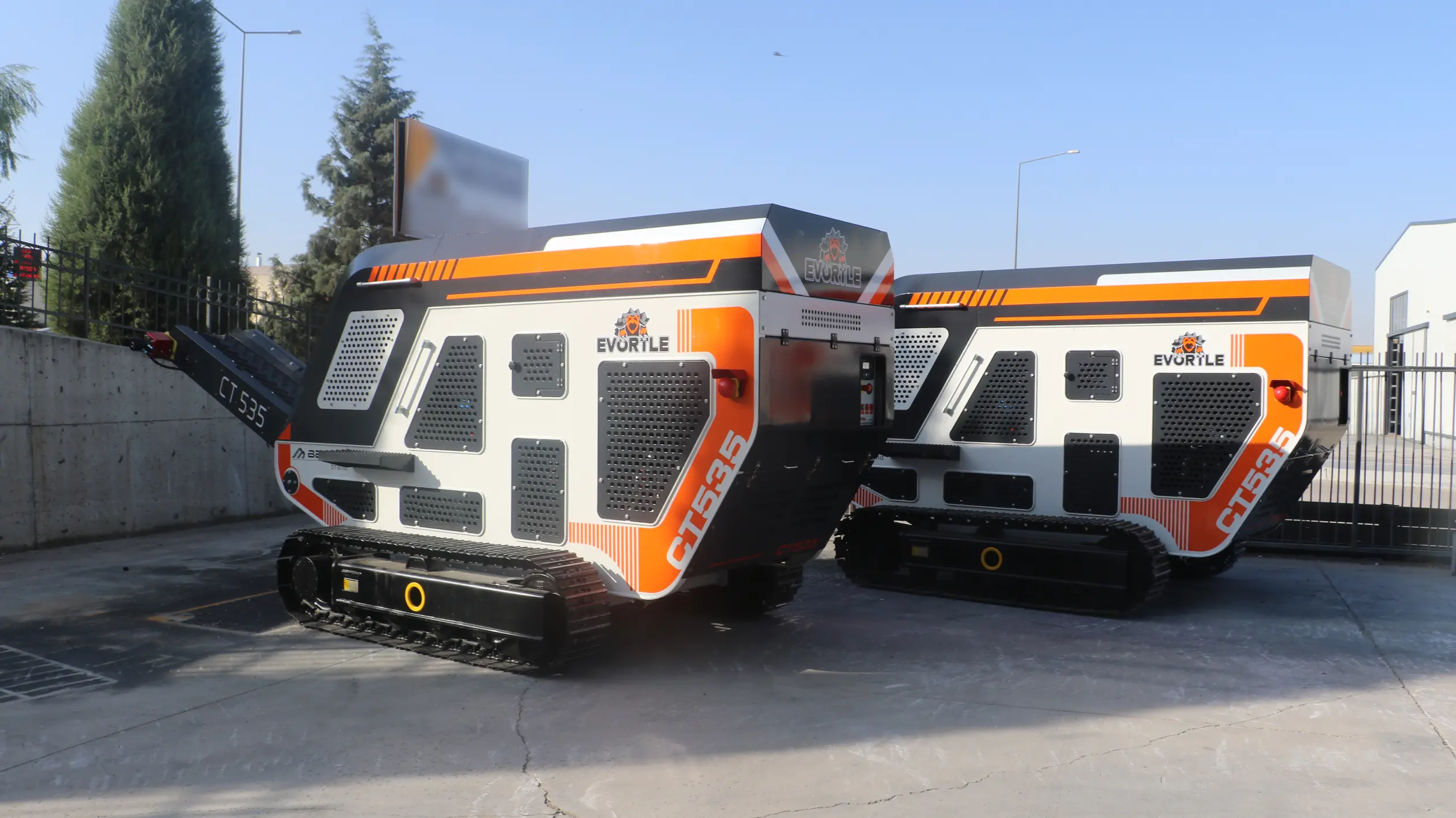
Evortle CT-740 Jaw Crusher

On-Site Concrete Crushing at 45 to 55 Tons Per Hour

The Evortle CT-740 mobile jaw crusher handles full-depth reinforced concrete slabs, masonry, and hard rock on-site. 28-inch jaw opening. Cross-belt magnet included. Wireless remote. Intelligent level control. $326,000.

Price
$326,000
45–55 t/h
At 0–50mm output confirmed throughput
28″
Jaw opening — no pre-breaking on full-depth slabs
$65/ton
Average disposal cost avoided per ton

Parts stocked in Smyrna, GA

Ships same or next day

Direct engineer support

Not a call center

On-site setup & training

Included with every machine

Nationwide field technicians

Insured, on-call

Commercial demolition contractors and C&D processors clearing concrete structures generate between 50 and 800 tons of reinforced concrete per project. Office buildings, warehouse slabs, bridge decks, foundations, parking structures — the material type is consistent. The volume is not small. And every ton that leaves the site as waste costs you at the tipping fee rate plus trucking, while every ton of virgin aggregate you buy for the next job costs you on top of that. The concrete you are paying to haul away is the same aggregate you are paying to bring back in.

A second buyer for the CT-740 is site contractors and quarry operations working in hard rock. When a site clearance project encounters granite or basalt bedrock during excavation, the choice is haul it out or crush it on-site. The CT-740 processes granite, basalt, dolomite, and limestone at confirmed throughput rates. The jaw opening, the CSS settings, and the output gradations work the same way on hard rock as on concrete. Quarry contractors supplying road base and drainage aggregate from a hard rock source run the same machine for a different input material. The per-ton case is the same: on-site processing eliminates the haul cost and produces a material you can use or sell.

300 Tons in 6 to 7 Hours

At 45 to 55 tons per hour. One operator. The excavator does not wait. The disposal bill does not come.

The CT-535 Keeps Up. The CT-850 Is More Machine Than You Need. Most Contractors Are Running Neither.

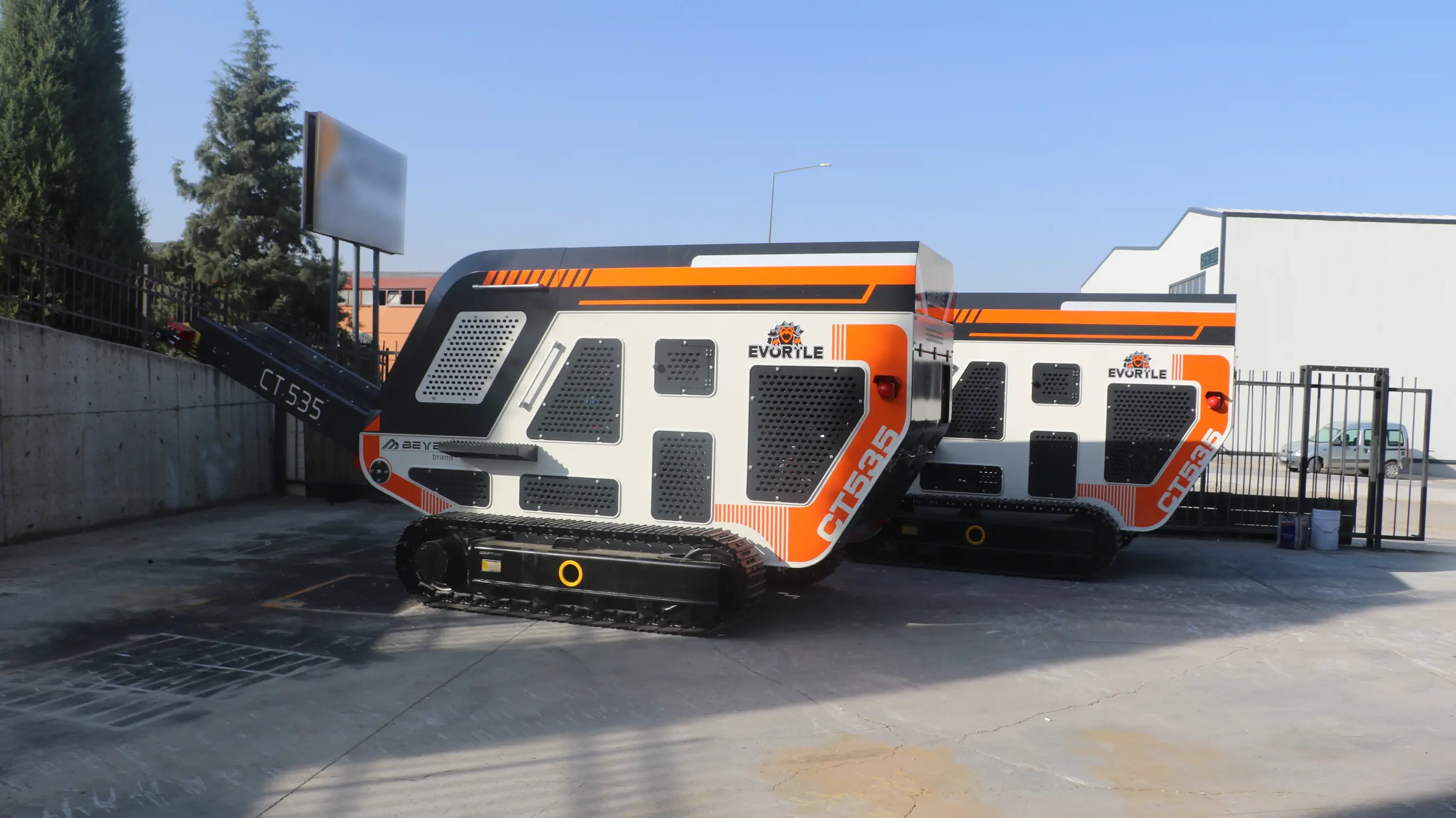
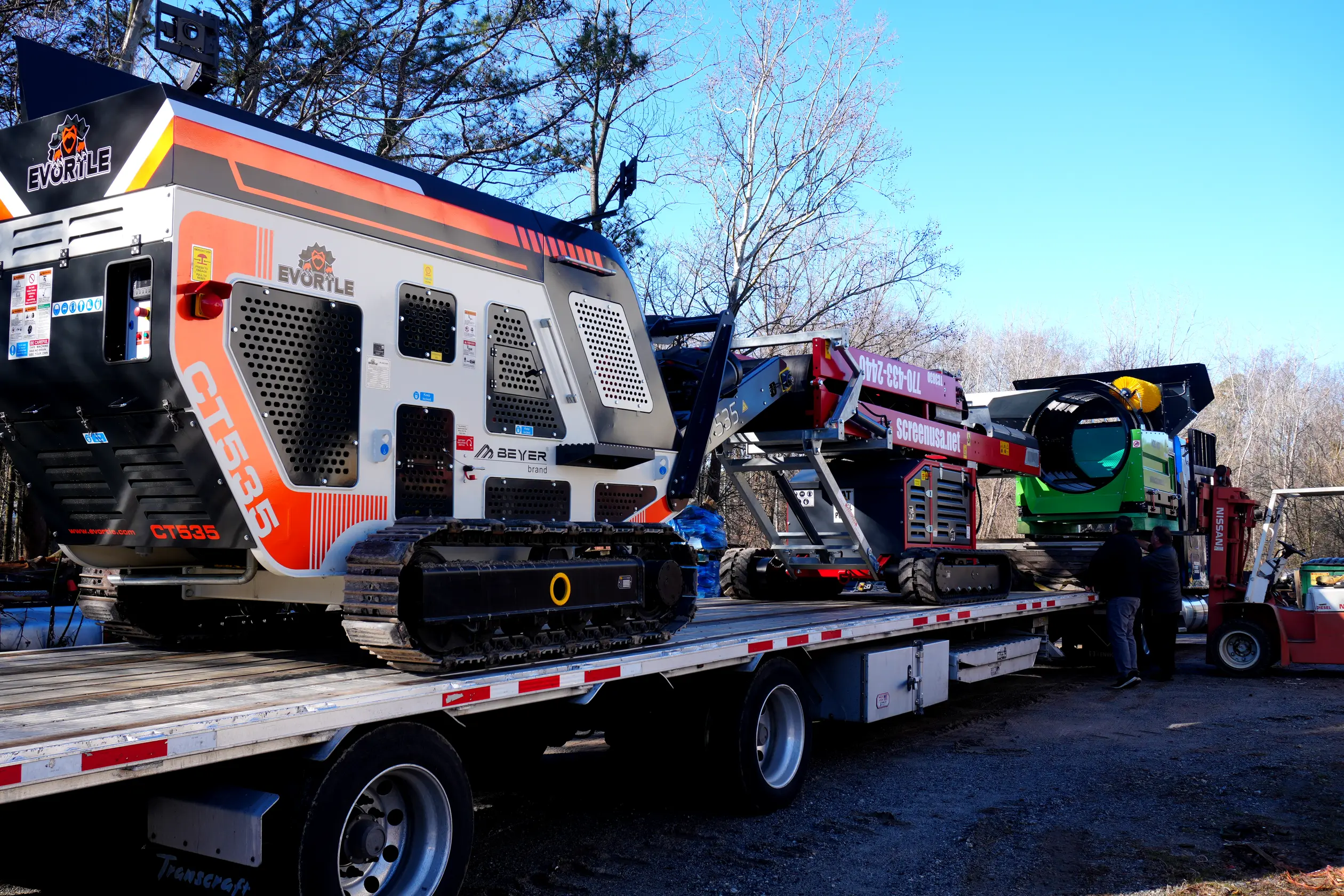
The CT-535 jaw crusher processes 20 tons per hour at 0–60mm output. For residential demo and light commercial work with smaller feed material, that is the right machine. But when a commercial slab job puts 28-inch concrete columns and full-depth foundation sections in front of you, the CT-535’s 18-inch jaw opening requires pre-breaking before the material feeds. That is extra equipment, extra passes, and extra time on a job where the schedule is already tight.
The CT-535 has a second limitation that throughput cannot solve. The CT-535 handles soft rock and limestone only. Granite, basalt, and dolomite are outside its rated material range. If your site hits bedrock during excavation and the material is granite or basalt, the CT-535 is not an option regardless of how much volume you need to move. The CT-740 handles hard rock without that restriction.
The CT-850 runs 65 to 95 tons per hour and weighs 56,000 lbs. If you are running a high-production recycling circuit processing thousands of tons per month, the CT-850 is built for that volume. If you are running 5 to 15 commercial jobs per year at 100 to 500 tons each, you are paying for throughput capacity you will not use and moving a machine that weighs as much as a loaded fuel tanker.
The gap between those two machines is where most commercial demo contractors actually operate. That is where the CT-740 fits.
Since 1973
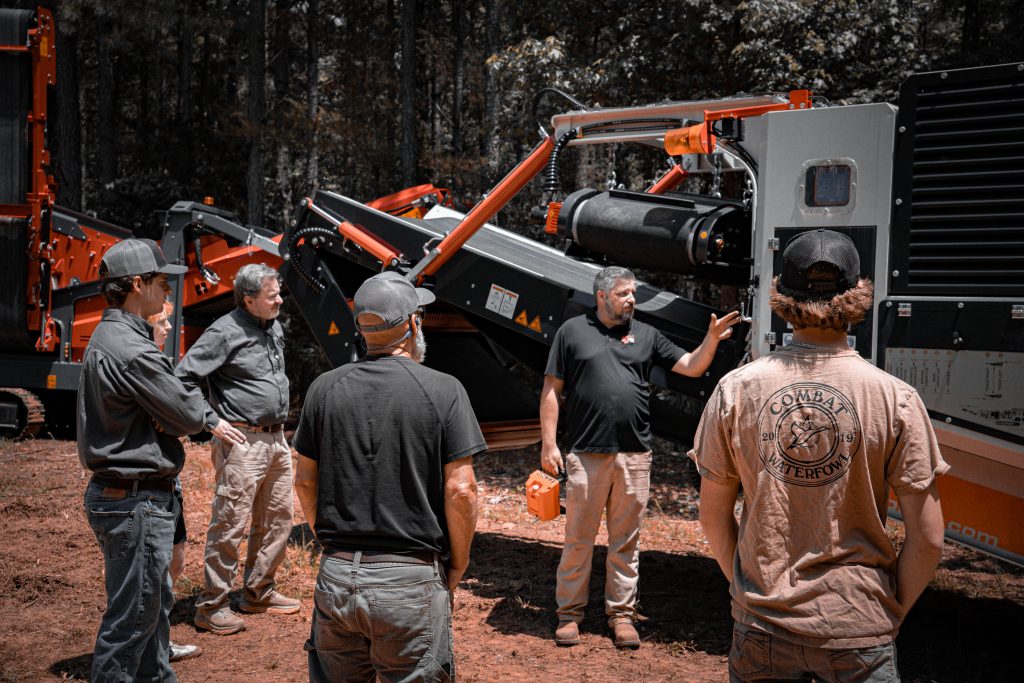
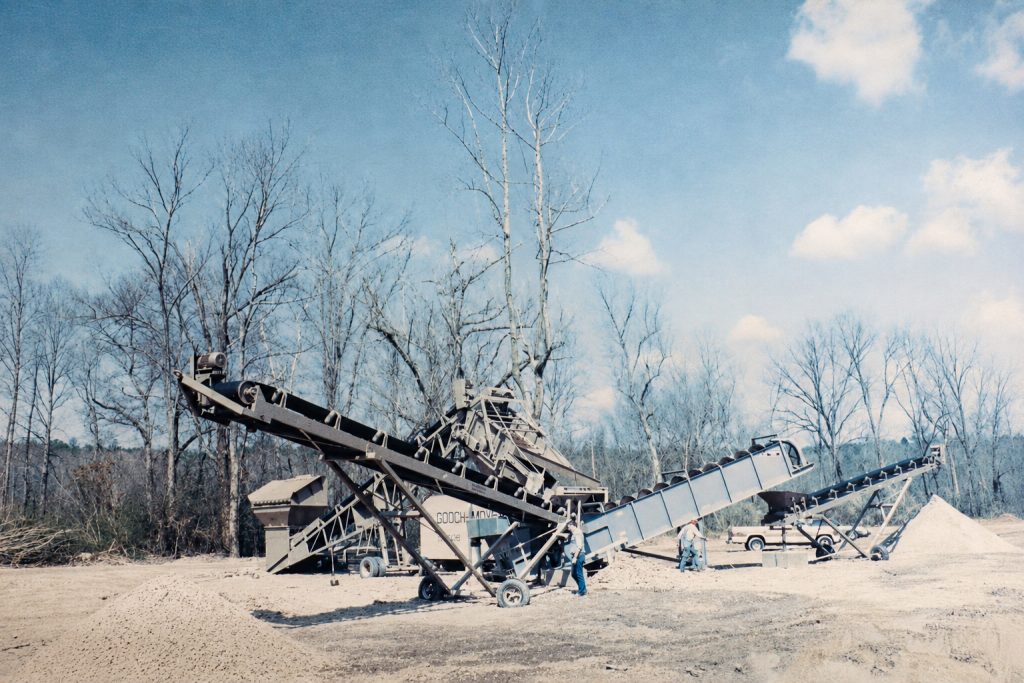
We have been selling jaw crushers to demolition contractors since 1973. We know what happens when a contractor puts a CT-535 in front of a full commercial foundation pour — material starts backing up on the excavator, throughput drops, and the job takes longer than the estimate. We also know what it costs to transport and finance a 56,000-lb machine on a project that does not need it. The Evortle CT-740 was sized for the work that falls between those two jobs. We stock parts in Smyrna, Georgia, and we come to your site to commission the machine with your crew.

How the CT-740 Turns Demolished Concrete Into Usable Aggregate

01

Load

Feed concrete rubble, masonry, or rock into the CT-740’s hopper with an excavator or loader. The hopper holds 4.57 cubic yards — 6’1″ by 9’6″. The 28-inch jaw opening accepts full-depth slabs, columns, and foundation sections without pre-breaking. The intelligent level control system reads the fill level inside the crusher chamber and automatically adjusts the feed rate to prevent overfilling and maintain stable throughput.
02

Crush

Material enters the jaw chamber and is compressed between the fixed and moving manganese-steel jaw plates. CSS adjusts hydraulically from 15mm to 100mm without tools or manual adjustment. At 0–50mm CSS, the CT-740 processes 45 to 55 tons per hour — enough to keep a mid-size excavator fully productive. At fully open settings, throughput reaches 80 to 100 tons per hour for coarser scalping applications.
03

Separate Rebar

Crushed material discharges onto the 32-inch discharge belt at 8 feet 6 inches. The integrated cross-belt magnet — included as standard on the CT-740 — runs continuously above the discharge belt and pulls rebar, wire, and ferrous debris off the top of the crushed material before it reaches the stockpile. No manual picking. No downtime. The rebar drops into a separate pile alongside the machine.
04

Stockpile

Clean crushed aggregate stockpiles directly under the discharge conveyor. Set the CSS at 0–50mm and the output is road base and fill aggregate. Open the gap wider for a coarser fraction ahead of a vibratory screening plant. Pair the CT-740 with the Screen USA CD-410 to sort three fractions — overs, middles, and fines — from a single pass.

What You Are Paying Per Ton to Haul Demolished Concrete

~$6
Per ton — CT-740 on-site
Fuel, one operator, wear parts, amortization. Adjust to your actual rates in the calculator below.
~$73
Per ton — Haul and dump
Starting point. Tipping fee + trucking. Varies significantly by market.
$20K
Savings — 300-ton job
At $73 haul vs. $6 crush. Repeats on every project at that rate.
Method
Cost Per Ton
300-Ton Job
10-Job Year
MethodCrush on-site (CT-740)
Cost Per Ton~$6.00
300-Ton Job~$1,800
10-Job Year~$18,000
MethodHaul and dump
Cost Per Ton~$73.00
300-Ton Job~$21,900
10-Job Year~$219,000
MethodAnnual gap
Cost Per Ton
300-Ton Job~$20,100 per job
10-Job Year~$201,000
Adjust the tipping fee and trucking cost to your market in the calculator below. The gap above is before RCA value. If you sell the crushed output, add the revenue. If you reuse it on-site — as road base, structural fill, or drainage aggregate for the next phase of the same project — add the cost of the virgin aggregate you did not have to buy. Both sides of that calculation belong in the math.

Calculate Your Concrete Crushing ROI

Disposal costs and RCA prices vary by region. The defaults below are starting points — adjust every number to match what you are actually paying and receiving in your market. The calculation is only as accurate as the inputs you give it.
100 tons1,500 tons20,000 tons
Annual net value
$0
At 1,500 tons/yr vs. $73/ton disposal
Annual crushing cost with CT-740
$0
Fuel + operator + wear parts (excludes amortization)
Calculating...
These are estimates based on your inputs, not guaranteed results. Disposal rates, RCA pricing, and operating costs vary by region and job conditions. Call us for a quote built around your actual numbers.
Get a Site-Specific Quote

Which Evortle Jaw Crusher Fits Your Volume?

Spec
CT-535
CT-740
CT-850
SpecJaw opening
CT-53518" x 14"
CT-74028" x 16"
CT-85032" x 20"
SpecMax feed size
CT-535~20"
CT-74028"
CT-85032"
SpecCSS range
CT-5353/4"-4"
CT-7401"-4"
CT-8501"-4"
SpecTPH at 0-50mm
CT-53520 t/h
CT-74045-55 t/h
CT-85065 t/h
SpecTPH at fully open
CT-535~30 t/h
CT-74080-100 t/h
CT-85095 t/h
SpecEngine
CT-53574 HP Hatz
CT-740134 HP Perkins or 140 HP Yanmar
CT-850150 HP Cat or Perkins Tier 4 Final
SpecFuel consumption
CT-535
CT-740~4.2-4.75 gal/hr
CT-850~4.75-5.8 gal/hr
SpecWeight
CT-53514,331 lbs
CT-74038,600 lbs
CT-85056,000 lbs
SpecTransport
CT-53518'9" x 7'1" x 8'11"
CT-74039'3" x 7'2" x 9'6"
CT-85038'8" x 7'6" x 10'8"
SpecCross-belt magnet
CT-535Optional (+$7,000)
CT-740Included
CT-850Included
SpecWireless remote
CT-535Included
CT-740Included
CT-850Included
SpecIntelligent level control
CT-535No
CT-740Yes — CT-740 only
CT-850No
SpecBy-pass conveyor
CT-535No
CT-740No
CT-850Yes — CT-850 only
SpecHard rock capable
CT-535No — soft rock and limestone only
CT-740Yes
CT-850Yes
SpecPrice
CT-535$156,900
CT-740$326,000
CT-850$426,000

CT-535

$156,900
Jaw opening 18″ x 14″
Throughput 20 t/h at 0-50mm
Engine 74 HP Hatz
Weight 14,331 lbs
Magnet Optional (+$7,000)
Choose the CT-535 if: Your projects average under 200 tons of concrete, feed material is under 20 inches, and you are running residential or light commercial demolition. The CT-535 mobilizes fast and fits on a standard rollback. Soft rock and limestone only — not rated for granite, basalt, or dolomite.
Commercial Demo

CT-740

$326,000
Jaw opening 28″ x 16″
Throughput 45-55 t/h at 0-50mm
Engine 134 HP Perkins / 140 HP Yanmar
Weight 38,600 lbs
Level control Intelligent (CT-740 only)
Choose the CT-740 if: You are processing full-depth commercial concrete — slabs, columns, foundations — where feed size regularly exceeds 20 inches and throughput matters. Hard rock is a second reason: granite, basalt, and dolomite require the CT-740 as the minimum. The intelligent level control lets one operator manage the machine and the excavator simultaneously.

CT-850

$426,000
Jaw opening 32″ x 20″
Throughput 65-95 t/h confirmed
Engine 150 HP Cat or Perkins Tier 4 Final
Weight 56,000 lbs
By-pass conveyor Included (CT-850 only)
Choose the CT-850 if: Throughput is the production constraint. You are running a demolition yard, C&D facility, or quarry operation where the machine must keep pace with a full-size excavator through complete shifts at high volume. The CT-850 at 56,000 lbs is not the right machine for contractors running 5 to 15 projects per year.

Prices as of August 2026. Subject to change. Financing available — call 770-433-2670.

If You're Going to Do Something With the Material, Add the CD-410

The CT-740 alone produces a single crushed fraction at whatever CSS you set. Set it at 0–50mm and you get a road base-grade pile. That is useful — it eliminates the disposal cost and gives you material you can use or sell as fill. It is also the floor, not the ceiling, of what on-site crushing can return.
If you have a buyer for aggregate, a site that requires spec material, or a state DOT contract that specifies graded fractions, a single crushed output is not enough. A 0–50mm pile contains oversized pieces, fines, and mid-range material all mixed together. Mixed material either gets used for the lowest-value application or sits stockpiled waiting for the right job. Sorted fractions have specific applications and specific buyers.
The Screen USA CD-410 vibratory screening plant pairs directly with the CT-740 and sorts the crushed output into three separated fractions in a single pass.

Overs

Coarse fraction
Material above top deck aperture. Returned for re-crushing or stockpiled as coarse drainage aggregate. On a well-set CT-740, the overs fraction is minimal at production CSS.

Middles

Mid-range fraction
Clean crushed aggregate meeting spec for drainage aggregate, pipe trench fill, or coarse road base. Material you would otherwise purchase and truck in for the next phase of the same project.

Fines

Sub-base and fill
Finest fraction from crushed concrete. Compactable structural fill, sub-base under new concrete pours, or grading fill. Again — material you would otherwise buy.
The reuse case — what most contractors miss: Crushing alone eliminates the haul-out. Crushing and screening eliminates the haul-out and the haul-in. The same concrete slab you demolished on Monday becomes the road base, drainage aggregate, and structural fill you need for Thursday’s next phase — without a single aggregate delivery truck showing up. The fines go under the new slab. The middles go in the pipe trench. The overs go on the access road or the building pad base. Nothing leaves the site as waste. Nothing comes in as purchased material.
Spec
CD-410
SpecScreen box
CD-4102-deck, 4 ft. x 10 ft.
SpecTop deck
CD-410Punch plate
SpecIncline
CD-410Adjustable
SpecHopper
CD-4105.5 cu.yd.
SpecFeed conveyor
CD-41040" wide, 10'6" long, variable-speed
SpecFines conveyor
CD-41036" wide, 8'6" discharge height
SpecMiddles conveyor
CD-41026" wide, 8'6" discharge height
SpecOvers conveyor
CD-41040" wide, 8'3" to 10'7" discharge height (adjustable)
SpecEngine
CD-41074 HP Cat C2.2 Tier 4 Final
SpecWeight
CD-41032,000 lbs
SpecTransport
CD-41035'10" L x 8'4" W x 10'6" H
SpecPrice
CD-410$199,900
Full circuit investment: CT-740 ($326,000) + CD-410 ($199,900) = $525,900. Both available with financing. Call 770-433-2670.
When the CT-740 alone is the right answer: If your goal is disposal cost elimination and you do not have a buyer for graded aggregate, the CT-740 alone does the job. Crushed concrete at 0–50mm is usable as structural fill and road base without further processing. The CD-410 is the right addition when the output is going somewhere specific — a buyer, a DOT spec, a project with defined aggregate requirements. If you are not sure, call us. We will tell you whether the circuit makes sense for your volume and your market.
Screen media aperture sizes are specified per application. We will spec the right media for your material and your intended use. Call 770-433-2670.

Materials and Feed Size

Confirmed materials the CT-740 processes: Reinforced concrete (with rebar), plain concrete, brick, masonry, cinder block, limestone, hard rock, dolomite, gravel, tile, clinker, gypsum, silica, flint
On hard rock: The CT-740 processes granite, basalt, dolomite, and limestone at confirmed throughput rates. This is the primary material step-up from the CT-535, which handles soft rock and limestone only and excludes granite, basalt, and dolomite. Site contractors encountering bedrock during excavation, quarry contractors supplying aggregate from a hard rock source, and aggregate producers processing stone all run the CT-740 on the same machine they use for concrete. Output at 0–50mm from hard rock meets road base and drainage aggregate specifications for most state DOT applications. Call us to confirm the right CSS for your material and intended use.

Approved Materials

• Reinforced concrete (with rebar)
• Plain concrete and masonry
• Brick and cinder block
• Limestone
• Granite, basalt, dolomite (hard rock)
• Gravel, flint, silica
• Clinker, gypsum, tile

Not Processed by This Machine

• Asphalt — requires impact crusher (bituminous binder resists jaw compression)
• Material larger than 28 inches — pre-break to feed size before hopper
On rebar: The CT-740’s jaw passes rebar through the crushing chamber without damage to the machine. Rebar does not wrap on a jaw — it flexes, bends, and exits with the crushed material onto the discharge belt, where the integrated cross-belt magnet separates it before stockpiling. This is the fundamental difference between a jaw crusher and an impact crusher on reinforced concrete: impact rotor blow bars wrap on rebar, increasing downtime and wear part cost. Jaw plates do not.
On feed size: The CT-740’s jaw opening is 28 inches wide. Material larger than 28 inches should be broken to feed size before entering the hopper. Most full-depth commercial slabs feed directly without pre-processing. Footings and thick foundation pours may require pre-breaking with a hydraulic breaker depending on pour dimensions.

What a Commercial Demo Site Looks Like With the CT-740 Running

A commercial demolition crew clearing a 300-ton reinforced concrete structure currently hauls that material at $65 per ton in tipping fees plus trucking — $21,900 in disposal before the pad is cleared. With the CT-740 running at 45 to 55 tons per hour, that same 300 tons processes in 6 to 7 hours. One operator. The cross-belt magnet pulls rebar continuously. The crushed output stockpiles as road base at 0–50mm or as structural fill at a wider gap setting.
The disposal cost for that job drops from $21,900 to approximately $1,800. The rebar pile beside the machine is ferrous scrap. The crushed aggregate goes to road base on the next job or sells at $15 to $20 per ton. What was a $21,900 liability is now an $1,800 operating cost and a material credit on the other side.
On an annualized basis at 10 jobs per year at 300 tons each, the CT-740 saves approximately $201,000 in disposal fees before accounting for RCA revenue. At that volume, the machine pays for itself inside two years at most market rates.

Jaw Crusher vs. Impact Crusher for Reinforced Concrete

The most common equipment comparison for commercial demo contractors is jaw crusher versus impact crusher. Rubble Master, Komplet, and several other manufacturers sell impact crushers in the CT-740’s throughput range. Here is the honest comparison for reinforced concrete work.

Rebar Handling

Impact crushers use high-speed rotating blow bars to fracture material. Rebar wraps around the rotor. A single rebar incident means stopping the machine, opening the crusher housing, and manually cutting the rebar off the rotor. On a reinforced commercial slab with heavy rebar mat, this is not an occasional event. It is a regular disruption to production.
Jaw crushers compress material between two plates. Rebar bends and passes through. The CT-740’s integrated cross-belt magnet then pulls it off the discharge belt automatically. No rotor. No wrap. No manual intervention.

Wear Cost on Reinforced Concrete

Impact crusher blow bars on rebar-heavy material wear faster than jaw plates on the same material. Jaw plates are reversible — one set of plates has two wear faces, effectively doubling service life before replacement. At current wear part pricing, jaw plates on reinforced concrete run lower cost per ton than blow bars on equivalent throughput.

Maintenance

Jaw crushers have fewer moving parts and a simpler maintenance schedule than impact crushers. The primary wear components on the CT-740 are the jaw plates and the toggle plate. Jaw plates are reversible — flip them when one face is worn and you get a second full service life from the same set before replacement. An impact crusher requires managing blow bars, impact plates, the rotor assembly, and additional sealing components. Rotor inspection intervals are more frequent than jaw plate checks. For contractors who want a machine that runs with minimal daily intervention, the jaw is the lower-maintenance choice.

Output Quality

Impact crushers produce a more cubical, angular aggregate — which is better for asphalt and concrete production applications where particle shape matters. Jaw crushers produce a flakier output that performs well for road base, structural fill, and drainage aggregate. For most C&D recycling applications, jaw crusher output meets ASTM D2940 road base specification without further processing.

On Clean Hard Rock

Jaw crushers process granite, basalt, limestone, and dolomite directly. For quarry contractors and aggregate producers processing clean hard rock without rebar, the jaw vs. impact decision comes down to output particle shape. Impact crushers produce a more cubical, angular particle that meets high-specification requirements for asphalt aggregate and certain concrete mix designs. Jaw crusher output from hard rock is well-suited for road base, drainage aggregate, and structural fill, but is flakier in particle shape than impact-crushed output. If your end market requires a cubical particle for a high-specification application, that distinction matters and an impact crusher may be the right tool. If your end use is road base and fill from hard rock, jaw crusher output meets spec, and the maintenance and wear cost advantages carry over from the concrete application.

Rubble Master and Komplet specifications referenced from publicly available manufacturer data, August 2026. Screen USA does not manufacture or sell impact crushers.
Keep the Operation Running

FyreBx skid steer attachments built for what you run alongside this machine.
LandBx
Concrete fines at the jaw discharge generate silica dust — an OSHA-regulated exposure under 29 CFR 1926.1153 for construction sites. The LandBx mounts to any skid steer and delivers 5 to 250 GPM of water suppression directly at the crusher discharge and stockpile zone. No water truck on-site. No separate dust suppression rig.
LandBx
Concrete fines and clay set on jaw plates, the discharge conveyor, and the magnet housing between shifts. Buildup accelerates wear and reduces throughput. The LandBx delivers high-volume wash water to clear buildup before it hardens — extending wear part life between replacements.
FuelBx
The CT-740 burns approximately 4.5 gallons of diesel per hour at production throughput. On a full shift, that is 36+ gallons before you account for the excavator. The FuelBx carries 300 gallons of diesel on the front of a skid steer and delivers it through a 50-foot hose reel — no fuel truck scheduling, no machine idle time, no lost production waiting on a delivery.

How to Get the CT-740 Working on Your Site

01

Tell us about your demolition job

Call 770-433-2670 or fill out the form below. Tell us your material type, average feed size, tons per project, and how many projects you run per year.
02

We spec the right model

We match your volume, feed size, and site setup to the CT-535, CT-740, or CT-850. We walk through the cost comparison for your specific numbers and confirm the right screening pairing if you need fractionated output.
03

We deliver, set up, and train your crew

The machine is delivered to your site. We commission it with your operator and do not leave until the first crushing cycle is complete and your crew knows the machine.
Every load of demolished concrete you haul off a job site is disposal cost with no return. Whatever your local tipping fee is, it compounds across every project, every year, with nothing to show for it. The calculator above runs the math on your actual rates. Put in your disposal cost and your annual volume — the payback period shows up in tons, not years of guessing. The CT-740 at $326,000 does not require high volume to make sense. It requires the jobs you are already running.

or call 770-433-2670 — Monday–Friday, 8am–5pm ET

Your CT-740 is on the commercial demo site. The excavator feeds the hopper — full-depth slab sections, columns, foundation pours. The intelligent level control manages the feed rate. The jaw runs steady at 50 tons per hour. The cross-belt magnet pulls rebar off the belt without anyone touching it. Beside it, the CD-410 sorts the discharge into three stockpiles: fines for compactable fill under the new slab, middles for the pipe trench, overs for the building pad base. By the end of the week, the demolished concrete is gone and the next phase has its aggregate.

No haul trucks took the old concrete away. No aggregate deliveries brought new material in. The same concrete that was a disposal problem on Monday is the sub-base, trench fill, and road base by Friday — sorted, on-site, ready to use. You did not pay to remove it. You did not pay to replace it.

That is what the full circuit changes. Not just the disposal line. The purchase order that was never written.

Parts in Stock. Engineers on Call. No Overseas Wait.

Every machine we sell is backed by US-stocked parts out of our Smyrna, Georgia facility. Not a backorder form. Not a six-week lead time from a factory in another country. When something needs replacing, we ship it.

Beyond parts, you get direct access to the engineers who know these machines — not a call center reading from a manual. We have been doing this since 1973. That means we have seen every problem these machines can have, we know how to fix them, and we have the parts to do it.

US Parts Inventory

Common wear parts — jaw plates, conveyor belts, hydraulic components, screen media — stocked in Smyrna, GA. Ships same or next day.

Direct Engineer Access

When you call, you reach someone who knows the machine. Not a ticketing system. Not a callback queue. A person, on the phone, who can diagnose the issue and tell you what you need.

On-Site Setup & Training

We come to your yard. We run the machine with your crew. We don't leave until it's running right and your operators know what they're doing.

Nationwide Field Technicians

A network of insured field technicians across the US. If the problem can't be solved over the phone, we put someone on it.

Since 1973 — 50+ years of knowing exactly what breaks and exactly how to fix it.

Common Questions About the CT-740

Can the CT-740 handle reinforced concrete with rebar?

Yes. Reinforced concrete is the CT-740’s primary application. Rebar passes through the jaw crushing chamber without wrapping. The integrated cross-belt magnet then separates ferrous material from the crushed aggregate automatically as it moves down the discharge belt. You do not need to sort material before feeding or pick rebar from the output pile manually.

What is the difference between the CT-740 and the CT-850?

The CT-850 has a larger jaw opening (32 inches vs. 28 inches), higher throughput at production settings (65 t/h vs. 45 to 55 t/h), and weighs 17,400 lbs more. The CT-850 is built for high-production recycling circuits running sustained high volume. The CT-740 is the right machine for commercial demolition contractors processing 100 to 500 tons per project at a pace that keeps up with a mid-size excavator without the CT-850’s footprint, weight, or cost.

What is intelligent level control and what does it do?

The CT-740 has a level sensor inside the crusher chamber that monitors how full the chamber is during operation. When the fill level rises toward the maximum, the sensor signals the feed system to slow down, preventing overfilling and maintaining stable crushing conditions. In practice, one operator can run the CT-740 and manage the excavator at the same time without watching the crusher chamber constantly. The machine regulates itself.

What output sizes does the CT-740 produce?

The closed-side setting (CSS) is adjustable from 15mm (approximately 5/8 inch) to 100mm (4 inches) hydraulically. At 0-50mm CSS, output is road base and structural fill aggregate. At wider settings, output is a coarser scalping fraction suitable for passing through a vibratory screening plant or using as drainage aggregate. For separated fractions, pair the CT-740 with the Screen USA CD-410 vibratory screening plant.

Do I need a screening plant with the CT-740?

It depends on what you are doing with the output. The CT-740 alone produces a single crushed fraction at whatever CSS you set, usable as road base or structural fill without further processing. If you have a buyer for graded aggregate, a DOT spec to meet, or a job that needs separated fractions, you need a screening plant. The Screen USA CD-410 separates the crushed output into three fractions: overs, middles, and fines. Call us and we will walk through whether the full circuit makes sense for your volume and your market.

How much does the CT-740 weigh and what does it take to transport it?

The CT-740 weighs 38,600 lbs and transports at approximately 39 feet 3 inches long, 7 feet 2 inches wide, and 9 feet 6 inches high. A standard flatbed or lowboy handles it without oversize permits. All three CT models are designed to ship in a standard 40-foot high-cube container, which means the machine can be repositioned between job locations without special transport arrangements.

What is recycled concrete aggregate (RCA) used for?

At 0-50mm output, CT-740-crushed concrete meets the gradation for road base and structural fill in most state DOT specifications. Common uses include road base and sub-base, structural fill behind retaining walls, drainage aggregate, parking lot base course, and pipe trench fill. A contractor running the CT-740 with the CD-410 can use the fines as compactable fill under the new slab on the same site, the middles in the pipe trench, and the overs on the building pad. The material never leaves the site and nothing is purchased to replace it.

Can the CT-740 be rented instead of purchased?

Screen USA does not rent equipment directly. Our rental directory connects you with rental providers who carry jaw crushers in this size class.
What People Crush With the CT-740

Concrete Recycling
View Application →
Cinder Block & Masonry
View Application →
C&D Waste Processing
View Application →
Natural Rock
View Application →

Tell Us About Your Demolition Project.


Call Us Directly
770-433-2670
Monday–Friday, 8am–5pm ET