
SINCE 1973
SINCE 1973
Screen USA — Applications — C&D Recycling
Ships same or next day
Not a call center
Included with every machine
Insured, on-call
Demolished concrete makes up roughly 85% of construction and demolition waste by weight. Add cinder block, brick, and mixed masonry and you have a material stream that accounts for the majority of disposal volume on commercial demolition and site development projects.
Every ton of that material that leaves the site costs money twice. First, you pay to haul it: trucking plus tipping fees run $45 to $120 per ton depending on your market and the receiving facility. Second, you pay to bring aggregate back in for the next phase of work: road base, structural fill, sub-base material, pipe bedding — all purchased new at $15 to $30 per ton.
At 300 tons of demolished concrete on a standard commercial project, that gap — disposal cost plus replacement aggregate cost — runs $18,000 to $45,000. On a demolition yard handling thousands of tons per month, it is the difference between a profitable material stream and a cost center. The jaw crusher and screening plant circuit eliminates both sides of the equation.
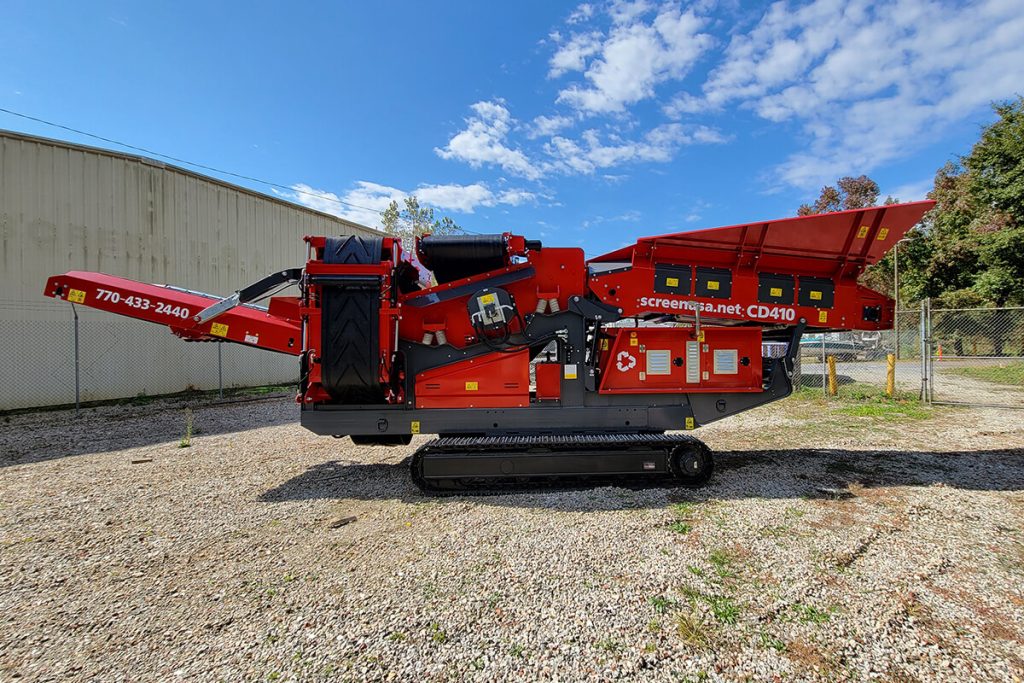
Crushed material from the jaw discharge feeds directly into the CD-410 or CD-516 vibratory screening plant. The 2-deck screen sorts material into three fractions in a single pass — overs, middles, and fines — each stockpiled by a dedicated built-on conveyor at a separate point around the machine.
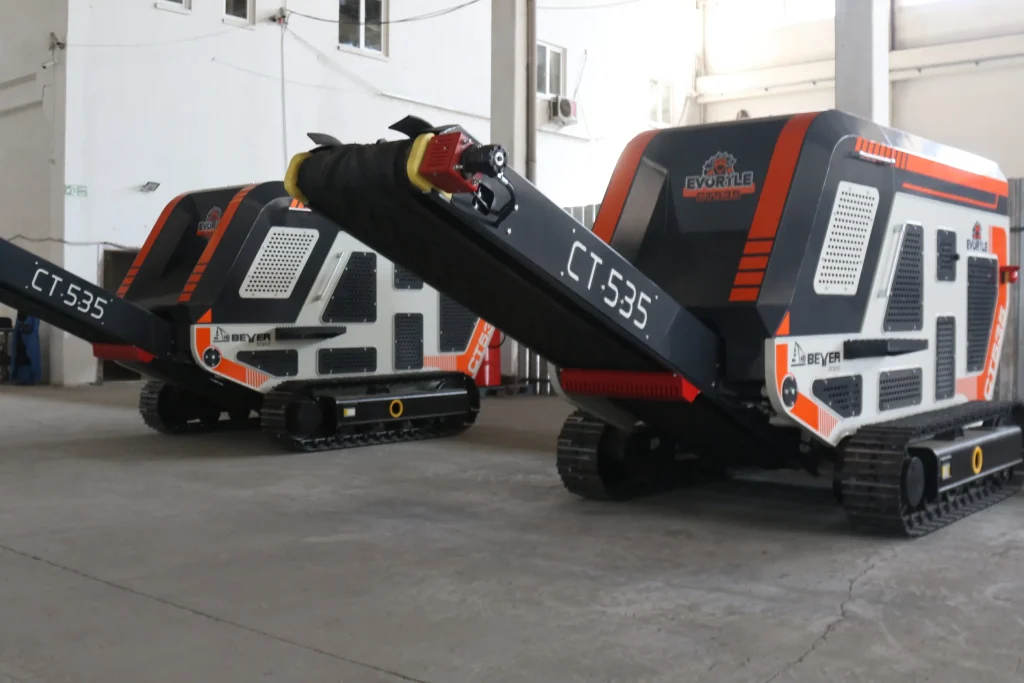
Entry Level
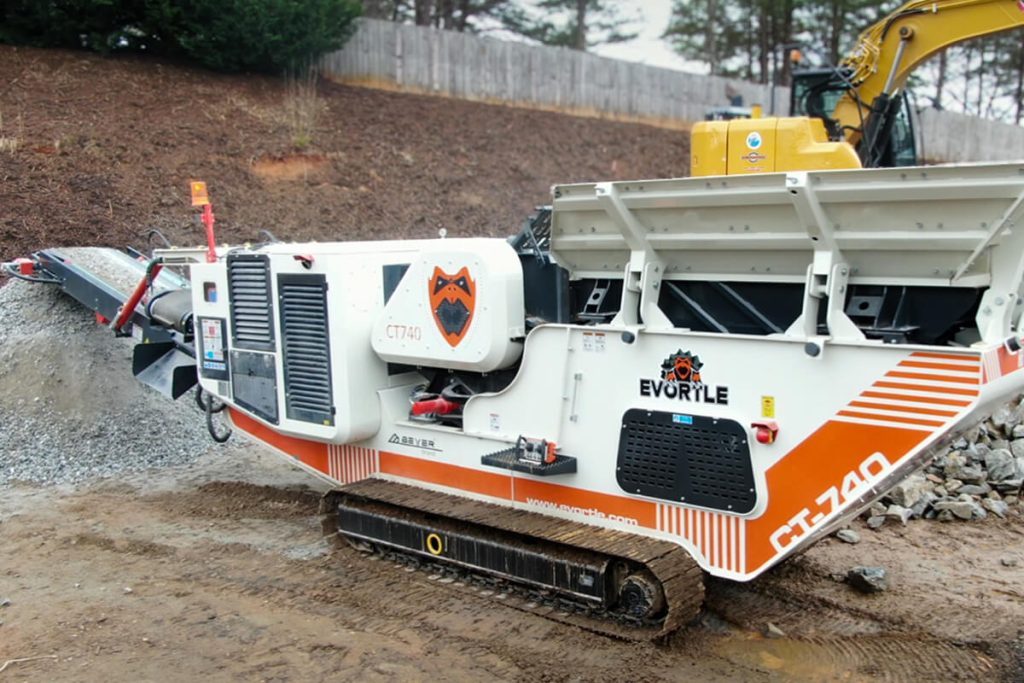
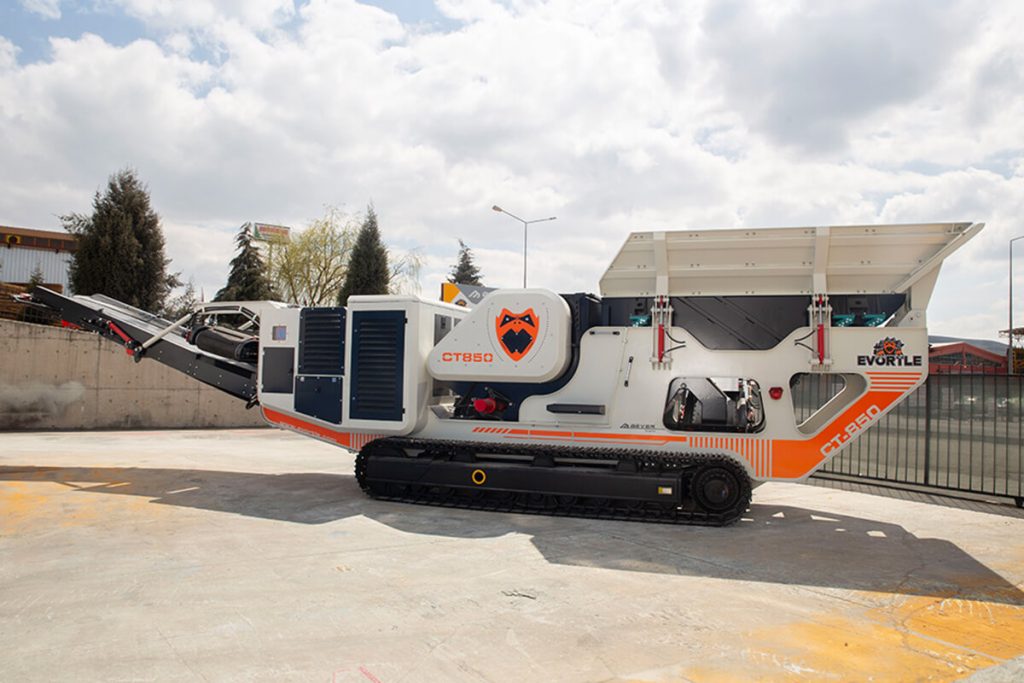
Pairs with CT-535 and CT-740
Full Circuit Pricing
These are estimates based on your inputs and national benchmarks. Results vary by region, material type, and job conditions. Call us for a quote built around your actual numbers.
Get a Site-Specific QuoteFines — Below bottom deck
Since 1973 — 50+ years of knowing exactly what breaks and exactly how to fix it.
Volume above 100 tons at a single site. At volumes above 100 tons, the operating cost of crushing — approximately $4 to $7 per ton all-in on a jaw crusher circuit — is well below the tipping fee it replaces. The more tons you process, the lower the per-ton cost, as the fixed amortization component spreads over more material.
Material type: concrete, masonry, cinder block. Reinforced concrete processes cleanly — rebar passes through the jaw chamber and is separated by the cross-belt magnet. Cinder block and masonry process without rebar complications. Mixed C&D that is primarily concrete and masonry by weight feeds well on a CT-740 or CT-850.
On-site aggregate reuse. When the crushed output has a direct use on the same project — road base for the access road, structural fill for the next phase of work, sub-base under a new slab — the full value is captured without transportation.
Small volume on a constrained site. Below 50 tons, mobilizing a jaw crusher and screening plant may not be economical relative to a direct haul. Below 100 tons is a grey zone — use the calculator above with your actual disposal rate to check the math.
Heavily contaminated C&D streams. A jaw crusher processes concrete, masonry, and hard rock. It does not handle drywall, treated lumber, plastics, roofing material, insulation, or hazardous waste — none of these are jaw crusher feed materials. If your C&D stream is heavily mixed with these materials, pre-sorting is required before feeding the crusher.
Asphalt-heavy demolition. The CT-series jaw crushers are not rated for asphalt. If your demolition project generates primarily asphalt millings or pavement, call us and we will walk through what the circuit looks like for your specific mix.
Cinder block walls, brick, masonry block, and CMU. Machine selection, feed considerations, and output applications for recycled masonry aggregate.
C&D Waste Processing →
Monday–Friday, 8am–5pm ET
Response Time
Same business day on calls and form submissions received before 3pm ET.
What to Have Ready
Material type, tons per month or per project, current disposal cost, and whether you need fractionated output or single-fraction road base.
Rental Directory
View the CT-series rental directory if you need short-term capacity before committing to a purchase.